Coffee roasting is a method that turns green beans into light, medium, or dark-roasted coffee using high heat. Roasting coffee brings out the beans’ complex flavors and antioxidants. It is important to get the roast right to achieve the cup you love.
Table of Contents
We drink coffee daily.
We have a usual coffee roast that we prefer.
But have you ever thought about what makes these roasts so different?
What if you try one and like it better?
Trying new things in life is scary.
We all want the comfort of our routine.
Drink a fresh coffee rather than my usual? No, not happening.
But maybe…
Just maybe, think for a second.
If you occasionally try different types of coffee roasts, or if you read about them.
What if…
The other roasts align more with your health and lifestyle?
The difference between coffee roasts is crucial. Not only how they change in color and flavor, but how they transform in properties on a base level.
The degree to which coffee beans are roasted is one of the most important factors that determine the taste of the coffee.
Let’s dig into different coffee roasts and their properties.
Coffee Roasting Explained: Types, Levels & Flavors
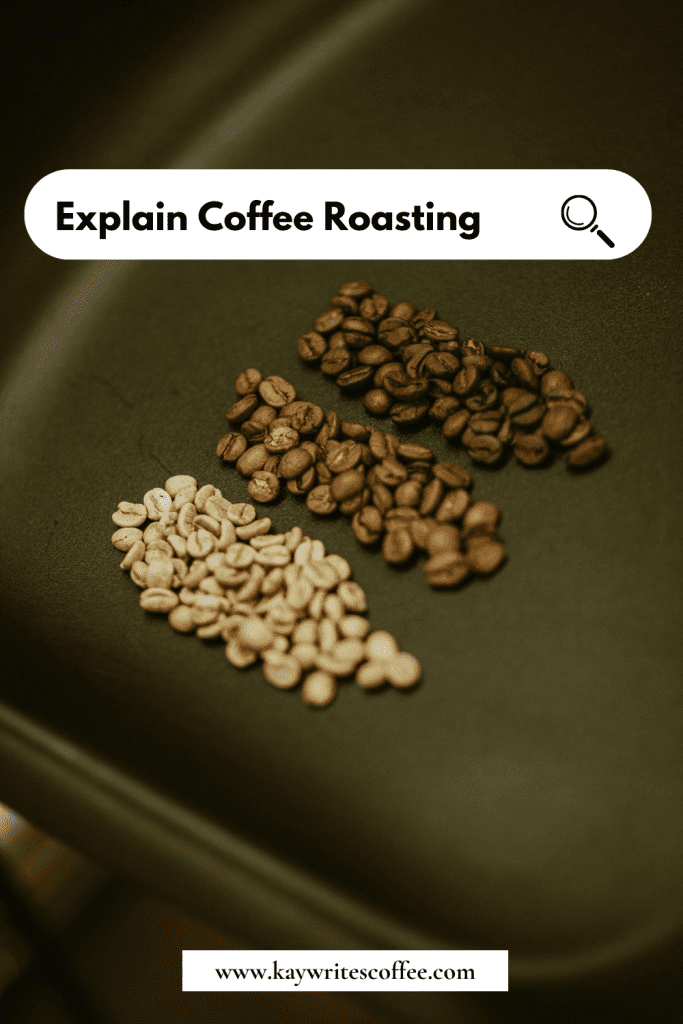
Before roasting, coffee beans are green, soft, with a fresh smell and little to no taste.

The roasting process transforms these raw beans into the scented, flavorful, crunchy beans that we recognize as coffee.
Other factors also enter this complex equation that determines your coffee’s taste.
Two coffee varieties from different countries and origins, grown in different soils and environments, will taste quite different even if they are roasted to the same level.
The age of the coffee, the processing method, the grind, and the preparation method will also change the taste.
But the roast level provides a starting point or baseline, a rough guide to the taste you should expect.
The common way to define the coffee roast levels is by the color of the roasted beans, which range from light to dark (or extra dark).

As the coffee beans absorb heat during roasting, their color darkens, and oils appear on the surface at higher temperatures.
However, coffee beans vary; color is not an accurate indicator of a roast.
But with the typical roasting temperature that yields a particular shade of brown, color is a suitable way to categorize roasting levels.
We can categorize coffee roasts from light to dark.
Let’s find out the difference in coffee roasting:
LIGHT ROAST COFFEE BEANS
Light roasts are light brown.
Light roasts have no oil on the surface of the beans.
Light roasts have a brownish grain taste and noticeable acidity.

Light roasts preserve the beans’ flavor to a greater extent than darker-roasted coffees.
Light roasts also retain most of the coffee bean’s caffeine.
Reaching an internal temperature of 356°F to 401°F gives coffee beans a light roast.
At or around 300-350 degrees, the beans crack and expand in size.
This is called the first crack.
So basically, a light roast means a coffee that has not been roasted beyond the first crack.

Read here about World Coffee Day: History, Fun Facts & Celebrations.
MEDIUM ROAST COFFEE BEANS
Medium-roasted coffee is medium brown and has more body than light roasts.
Exactly, the lighter roasts have no oil on the bean surface.
Medium coffee roasts lack the grainy taste of the light roasts.
They exhibit a more balanced flavor, aroma, and acidity.
Caffeine levels decrease, but medium-roasted coffee has more caffeine than in darker roasts.
Medium roasts have an internal temperature between 410°F and 428°F, between the end of the first crack and just before the beginning of the second crack.

Read: Coffee Facial at home with Leftover Coffee.
MEDIUM-DARK ROAST COFFEE BEANS
Medium-dark roasts have a richer, darker brown color.
Some oil shows on the surface of the beans.
A medium-dark roast has a heavier body than lighter or medium roasts, but lighter than dark roasts.
The beans get roasted to the beginning or middle of the second crack, about 437-450°F.
The flavor and aroma of the roasting process become more prominent, but the coffee may taste spicy.

DARK ROAST COFFEE BEANS
Dark roast coffee beans are dark brown, like chocolate, and sometimes almost black.
They have a sheen of oil on the surface, which is usually evident in the cup when we brew dark-roast coffee.
Dark roast coffee has a bitter, smoky, or even burnt taste, and it contains low levels of caffeine.
To reach a dark roast, roasters roast coffee beans to an internal temperature of 465-480°F, at the end of the second crack or beyond.
Roasters often roast them to a temperature exceeding 490°F.
The beans’ bodies are thin, and their flavor is dominated by tar and charcoal.

Apart from this short guide to the common coffee roasts from light to dark, to summarize the differences, in addition to the color range, here are some tips:
- As coffee roasts get darker, they lose the original flavors of the beans and take on the flavor from the roasting process.
- The body of the coffee gets heavier until the second crack, but then it thins again.
- Lighter roasts have more acidity than medium, dark-medium, and dark roasts.
- Lighter roasted beans are dry, while darker roasts develop a sheen of oil on their surfaces.
- Caffeine levels decrease as the roast darkens.
Finally, it is all about the taste, the flavor, the aroma.

It’s up to you if you prefer a lighter roast in the morning (which has more caffeine to get moving).
Or a darker one later in the day (less caffeine).
Roast level preferences are subjective because the roast level you like may depend on where you live.
In the United States, folks on the West Coast traditionally prefer darker roasts than those on the East Coast.
Europeans also favor dark roasts, giving rise to the so-called French, Italian, and Spanish roasts that dominate the darker end of the roasting spectrum.

Because of inconsistencies in roast levels across different roasteries, the coffee industry has not standardized roast names and descriptions.
Purity Coffee, for example, categorizes its offerings into light, medium, and dark roasts.
Focusing on flavor depth and complexity rather than caffeine strength. Commonwealth Joe coffee roasters categorize its coffees within three roast profiles:
Light Roast – PROTECT: a light-to-medium roast with high antioxidant content (CGA). It is also bird-friendly.
Medium Roast – FLOW: Original Medium Roast, which tastes smooth & balanced.
Dark Roast – EASE is best for lower acid and gut comfort. It is rich, complex, and full-bodied.
There are so many great coffee brands selling ethically sourced, organic coffee that is beneficial for health and impresses the tongue with rich flavor, and the olfactory nerve with the delicious aroma.
So whichever roast suits you, you can buy it.
Although an educated purchase is always the best purchase.
I prefer dark roast because I’m a dark chocolate girl.
Dark roast coffee beans taste chocolaty to me.
Which roast is your favorite, and are you ready to try other roasts?
FAQs
What is the coffee roasting process?
The coffee roasting process turns a soft green coffee bean into a crunchy brown coffee bean ready to grind and brew. This happens when green coffee beans are roasted at high heat with care and precision. Usually, three coffee roasts are produced: light, medium, and dark.
Is dark roast coffee good for diabetics?
Yes, dark roast coffee is good for fluctuating sugar levels. Coffee roasting produces compounds in the beans that are beneficial for insulin and help your body manage sugar fluctuations after meals, thereby regulating blood sugar more effectively.
Which coffee roast is best for GERD?
Dark coffee roast is generally good for acid reflux because it has lower caffeine than other roasts. Research suggests that dark roast also contains high levels of methylpyridinium, which is an antioxidant. Methylpyridinium prevents heartburn and increases ATP levels in cells, giving you high energy.
What is the meaning of coffee roasting?
Coffee roasting is the process of heating green coffee beans to achieve crunchy beans that can be ground and brewed. It involves sorting beans, heating them, cooling and packaging them, and sometimes even grinding them.

Hi! I’m Kounj, a freelance writer and a coffee enthusiast with experience of five years in the coffee space. I specialize in email marketing and blog writing for coffee brands and businesses. My niche focus is coffee and health, coffee lifestyle, and coffee wellness. I love writing, and I love coffee, so when you have a coffee + writing problem, I’m the only copywriter you want to contact.
Leave a Reply